How to register a trademark in Argentina: the complete guide
Everything you need to know to register and protect your trademark with the INPI: what a trademark is under Law No. 22,362, registrable types, Nice classes, costs, timelines, opposition, renewal every ten years, and mistakes to avoid. Written by Eguía’s industrial property agents.
In its simplest form, a trademark is a word, a logo, a slogan, or any sign that distinguishes your products or services from those of your competitors. You interact with trademarks all day long: the name of your phone, the app you open, the label on your clothes. Each of those signs can be — or should be — registered with the competent authority.
Distinctive signs in the marketplace
In Argentina, the Trademark and Trade Names Law (No. 22,362) defines a trademark as any sign capable of distinguishing products or services. The INPI (Instituto Nacional de la Propiedad Industrial, the National Institute of Industrial Property) is the agency that administers registration at the federal level.
Legally, a trademark is an identifier of origin: it allows consumers to associate a product or service with whoever produces or markets it. It is an intangible asset — you can’t hold it in your hand — but it forms part of your company’s assets together with patents, industrial designs, and copyright.
Argentine law admits different kinds of distinctive signs. These are the ones we see most often in practice:
Registrable types of trademarks
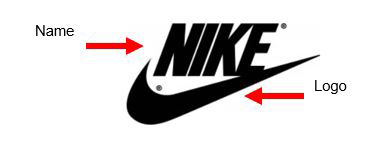
Names (word marks)
The word or name without a design: the name of your brand, product, or service. To be registrable it must be distinctive — the public must link it to your offering and not to a generic category.
Logos (figurative marks)
The symbol, icon, or image without words. It protects the visual form even if you change the trade name in the future.
Composite (mixed) marks
A combination of name and design in a single application. Useful when both elements are always used together, although the protection of each component on its own has nuances worth evaluating with an agent.
Slogans and advertising phrases
Expressions that accompany brand communication (“Just Do It”, “It’s a pleasure to serve you”). They must meet distinctiveness requirements; purely descriptive phrases are usually hard to register.
Sounds, colors, and three-dimensional shapes
Less frequent, but recognized: a distinctive jingle, a color established in the marketplace, or the characteristic shape of a container. They require proof that the public associates them with your brand.
3. How to choose a strong trademark
Not all trademarks enjoy the same level of protection. There is a scale of distinctiveness, from strongest to weakest:
Weak
Generic
The common name of the product (“T-shirts” for t-shirts). They cannot be registered: they belong to everyone’s language.
Descriptive
They describe qualities or origin (“Comfort” for soft clothing). The INPI usually refuses them unless distinctiveness has been acquired through intensive use.
Suggestive
They allude to the product without describing it (like “Burger King”). The consumer makes a small mental effort to connect the sign with the service.
Arbitrary
Words unrelated to the line of business (like “Apple” for technology). High protection and good registrability.
Fanciful
Invented terms (“Rolex”, “Mercado Libre”). Maximum distinctiveness: the easiest to register and defend.
Strong
Distinctiveness scale
Arbitrary and fanciful (maximum protection)
Words unrelated to the line of business (“Apple” for computers) or invented terms (“Mercado Libre”, “Rolex”). They are the easiest to register and defend.
Suggestive
They allude to the product without describing it directly. The consumer makes a small mental effort to connect the sign with the service. A good balance between creativity and registrability.
Descriptive
They describe qualities, origin, or function (“Artisan Bakery” for a bread shop). As a rule the INPI refuses them unless there is proof of intensive use that has created acquired distinctiveness in the marketplace.
Generic
The common name of the product or service (“Cola” for a soft drink). They cannot be registered: they belong to everyone’s language.
Beyond distinctiveness, check that there are no identical or similar trademarks in your line of business. A prior-rights search before investing in a visual identity saves you a costly rebranding. See our registered trademark search.
4. Registration vs. use in the marketplace
In Argentina, two levels of protection for distinctive signs coexist: the trade name, protected through actual use in a territory, and the national trademark registration with the INPI.
Local use / trade name — territorial protection; use must be proven.
INPI registration — national protection; presumption of ownership.
Local use vs. INPI registration
Trade name (protection through local use)
The trade name (Law No. 22,362, section 27; Civil and Commercial Code, section 151) protects the name under which you carry on an activity within a given territory — in practice, at the provincial level. Whoever uses it in a real, continuous, and public way can oppose third parties within that territory, even without a trademark registration. But they must prove the use, its duration, and local recognition: a far more demanding burden of proof than producing an INPI certificate.
Trademark registration with the INPI
Trademark registration grants a presumption of ownership and validity throughout the entire national territory. You appear in the INPI’s public register, you can use ® where appropriate, license with clarity, and take action against infringers on much stronger evidentiary footing.
Do I need to register before selling?
There is no legal obligation to register before you start selling. But if your brand grows, you invest in advertising, or you are thinking about franchising, registration should be an early priority. Finding out late that a competitor registered a similar sign forces you to change your name after you have already built a reputation.
5. National and international trademarks
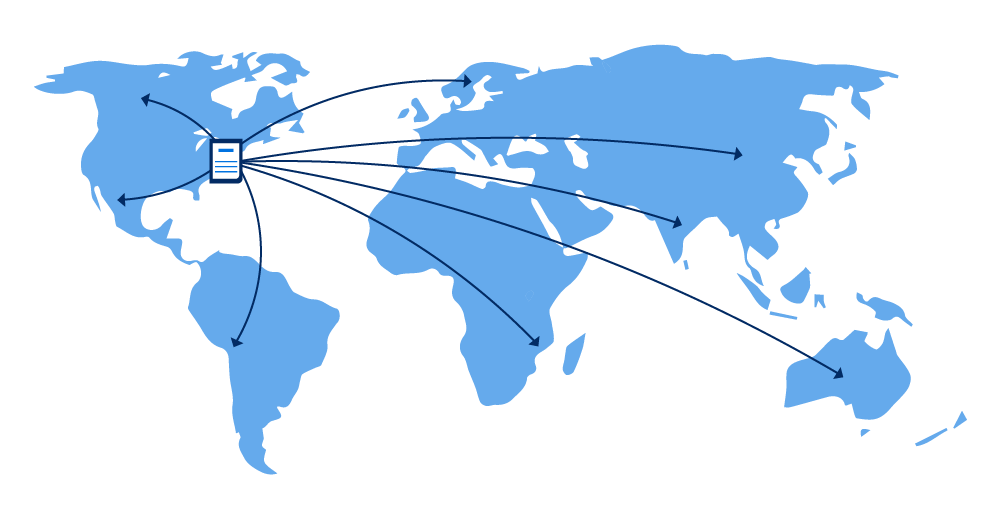
A registration with the INPI protects you only in Argentina. If you export, have a regional presence, or fear counterfeits from abroad, you need an international strategy.
National and international protection
Madrid Protocol
Argentina has not yet joined the Madrid Protocol: the Executive Branch is preparing to send the treaty to Congress, but today an Argentine trademark cannot be used as the basis for an international application. To protect your trademark abroad you must file in each country or region of interest (for example, the European Union trademark), and you can claim the priority of your Argentine application if you file within 6 months (Paris Convention).
Direct filings in each country
For a few key markets, it is sometimes better to file directly through local agents. It does not depend on the outcome of the Argentine procedure and lets you adapt classes and wording to each jurisdiction.
The choice depends on your business plan: Mercosur, exports to the U.S. or Europe, global e-commerce. At Eguía we design territorial protection strategies aligned with your expansion.
6. Why register your trademark
Registration is not an incidental bureaucratic formality: it is the foundation of the protection of your commercial identity.
Benefits of registration
Public notice of your right — Anyone who searches the INPI register finds your trademark. It deters imitators before they invest in a conflicting name.
Legal presumption — You are presumed to be the legitimate owner and the sign is presumed valid. In a dispute, whoever challenges you bears the burden of proof.
Nationwide scope — A single procedure covers the entire country, with no need to prove provincial use.
Business assets — Investors, franchisors, and buyers evaluate IP portfolios. A registered trademark adds value and makes license agreements easier.
Active defense — You can oppose third-party applications, bring unfair competition actions, and work with customs in cases of counterfeit imports.
Want to register your trademark with professional backing? At Eguía we have been working before the INPI for more than 75 years.
You can file an application yourself on the INPI’s portal. Many entrepreneurs try. But the procedure has technical requirements that lead to office actions, abandoned applications, and loss of priority.
PROFESSIONAL SUPPORT
Your trademark, well protected from the start
An IP agent turns an isolated filing into a protection strategy.
01
Strategy before filing
We search prior rights, assess risks, and define the classes your business really needs.
02
Technical drafting and filing
We prepare the sign and the list of products or services according to the INPI’s criteria.
03
Tracking every deadline
We monitor publication, office actions, oppositions, and expiration dates so the file is never abandoned.
04
Response and defense
We respond to office actions and design the strategy for oppositions or disputes with third parties.
How Eguía works during the registration
Risks of filing without advice
Incorrect description of products and services according to the official Nice list.
Too few or too many classes — you overpay or end up unprotected.
Failing to answer INPI office actions on time, leading to abandonment of the file.
Missing conflicting prior rights that a prior search would have detected.
What an industrial property agent brings
Prior-rights search — A risk report before paying fees.
Technical drafting — Classes, products, and representation of the sign in line with regulations.
Follow-up — Office actions, oppositions, publication and grant deadlines.
Defense — Responses to substantive office actions and representation in oppositions.
Law No. 22,362 provides for the involvement of registered agents for those who prefer to delegate the procedure. Fixing mistakes afterwards usually costs more than doing it right from the start.
8. Costs and INPI fees
The total cost has two components: official fees and professional fees if you hire a firm.
WHAT’S INCLUDEDOur serviceTrademark registration with the INPI
Prior-rights search
We check identical and similar trademarks before filing.
Class strategy
We define the right coverage for your activity and growth.
Filing with the INPI
We prepare the application and handle the formal filing.
File follow-up
We monitor publication, deadlines, and progress until resolution.
Response to office actions
We keep you informed and act on office actions or incidents.
Professional advice
A specialized team supports the decisions about your trademark.
Scope of the professional service
INPI fees
Fees are calculated per Nice class: each class you include in your application generates a filing fee. If you correct or expand the list of products later, additional fees may apply. Amounts are updated periodically — check the current fee schedule at inpi.gob.ar.
Item
Note
Application per class
One fee for each Nice Classification class included
Publication in the Gazette
Included in the ordinary grant procedure
Ten-year renewal
Fee per class every 10 years from the grant
Opposition
Fee if a third party opposes or you file an opposition
Professional fees
They vary with complexity, number of classes, and whether they include search, watch, and defense in oppositions. Be wary of “too cheap” rates that include neither a search nor responses to office actions.
The cost of not registering
Forced rebranding, litigation from a weak position, loss of positioning in search engines and social media, inability to stop fraudulent imports. In most cases, registering early is cheaper than fixing things late.
9. INPI procedure timelines
Trademark registration in Argentina is not instantaneous. Under normal conditions, 8 to 18 months pass between filing and the grant of the certificate. Oppositions, office actions, or corrections to the list extend the calendar.
The filing date sets your priority: even if the grant comes a year later, your right dates back to the day of the application vis-à-vis third parties who later try to register similar signs.
Filing — Online start, payment of fees, file number.
Formal and substantive examination — The INPI verifies requirements and distinctiveness. It may issue office actions that you must answer.
Publication — 30 calendar days in the Trademark Gazette for oppositions.
Grant — Registration certificate for 10 years if there is no successful opposition.
10. Decisions before filing
Owner of the registration
Decide whether you will register in the name of an individual or a company (SA, SRL, SAS). Ideally, the owner should be whoever exploits the trademark commercially. Changing ownership later requires an assignment procedure with additional costs.
Checklist before going to the INPI
Products and services
A trademark does not protect “everything”. It only covers what you describe in the application, classified under Nice. “Clothing” is not enough: you must list garments according to the official list. The “Dove” trademark coexists in different classes: soaps and chocolates, different owners.
Word, figurative, or composite
You can register the name alone, the logo alone, or both together. Registering them separately usually gives more flexibility if you update the logo in the future. Registering a composite mark protects the exact combination filed.
Prior search
Before paying fees, check the INPI register and the marketplace. A professional report includes phonetic variants, pending trademarks, and an assessment of the likelihood of confusion.
11. How to register a trademark with the INPI, step by step
Prior-rights searchCheck for identical or similar trademarks in the classes you are interested in. The INPI’s public search tool is a first step; a professional report deepens the analysis.
Defining classes and the listSelect the Nice classes and draft the products/services with technical precision according to the official classification.
Filing the applicationOnline filing on the INPI portal with the applicant’s details, graphic representation of the sign, classes, and payment of fees.
INPI examinationReview of formal requirements and distinctiveness. If there are office actions, file a response within the deadline.
Publication in the Gazette30 calendar days for third parties to file an opposition.
Grant of the certificateWith no opposition — or after winning the dispute — the INPI grants the registration for 10 years. You can now use ® under legal conditions.
12. Nice Classification and classes
Argentina adopts the International Nice Classification, with 45 classes: 34 for goods (classes 1 to 34) and 11 for services (classes 35 to 45).
Nice Classification
Choosing the right classes is strategic: you protect where you operate today and where you plan to grow. Class 25 (clothing), class 35 (advertising and retail), class 42 (technology services), and class 43 (restaurants) are common, but it depends on your actual activity.
Each additional class means an INPI fee and separate maintenance. Neither too narrow — leaving gaps — nor excessively broad — paying for sectors where you don’t compete.
Once your application is published, any third party with a legitimate interest has 30 calendar days to oppose it if they believe your trademark harms their prior rights (confusion, reputation, bad faith).
Opposition window — 30 days
An opposition opens adversarial proceedings: charges, documentary evidence, arguments. It can be resolved through an agreement between the parties, a withdrawal, or an INPI decision for or against your registration.
If you own an earlier trademark and detect a conflicting application, you can also file an opposition. Watching publications is key to not missing deadlines.
A trademark registration in Argentina lasts 10 years from the date of grant. Once that term expires, you can renew it for equal 10-year periods, indefinitely, as long as the trademark remains in commercial use.
Renewal cycle — 10 years
Renewal is processed before the INPI with a fee per class. Missing the deadline — even with limited grace periods — can lead to the lapse of the registration and leave your sign exposed to third-party registrations.
It is wise to calendar expiration dates at least six months in advance. At Eguía we manage renewals and reminders for trademark portfolios.
Once the certificate is granted, your responsibility does not end. The trademark stays alive through actual use in the marketplace and through defensive action.
Use of ® and ownership
Periodic renewals
Every 10 years, renewal per class before the INPI.
Keeping details up to date
Keep the legal address, representative, and ownership up to date in the file.
Market watch
Monitor new applications in the Gazette, unauthorized use on social media, e-commerce, and imports. You can oppose conflicting registrations, send formal notices, or bring court actions for unfair competition.
Correct use of the sign
Use the trademark exactly as registered. Substantial changes may require a new application. Use ® only once the certificate has been granted.
16. Common mistakes when registering
Mistakes to avoid
Registering too late — You invest in an identity before checking availability.
Poorly chosen classes — Insufficient protection or unnecessary fees.
Confusing a trademark with the tax authority’s business name — They are different concepts before different agencies.
Ignoring oppositions — Missing the 30-day deadline is irreversible.
Not answering INPI office actions — The application lapses through abandonment.
Using ® before the grant — It is misleading and can lead to penalties.
Forgetting the renewal — You lose an asset built over years.
17. Frequently asked questions
Do I need to register a trademark to use it in Argentina?
Registration is not mandatory to start using a sign, but without an INPI registration it is much harder to prove ownership and stop imitators. Registration gives you a legal presumption of rights throughout the country.
How long does a trademark registration last in Argentina?
The registration certificate lasts ten years from the grant and is renewed for equal ten-year periods, as long as the trademark remains in use and the corresponding fees are paid.
Can I register my trademark in several classes?
Yes. Each class of the Nice Classification is an independent application with its own INPI fee. It is wise to cover the classes where you sell today and where you plan to expand in the coming years.
What happens if someone opposes my application?
During publication in the Trademark Gazette, any third party with a legitimate interest can file an opposition within 30 calendar days. Adversarial proceedings with evidence and arguments follow; the INPI decides whether the registration proceeds.
Does the Argentine registration protect me in other countries?
No. It protects you throughout the national territory. Abroad, you need applications in each country or region of interest: since Argentina has not yet joined the Madrid Protocol, an Argentine trademark cannot be used as the basis for an international application. If you file within 6 months, you can claim the priority of your Argentine application.
When can I use the ® symbol?
Only once the INPI has granted the registration certificate. While the application is pending you can use ™ or indicate “trademark pending before the INPI”.
Is your case not covered in the guide? Tell us your situation and an attorney from our firm will reply within 24 business hours, free of charge.