Generative artificial intelligence (AI) is redefining entire industries, but it also raises significant questions for the world of intellectual property (IP).
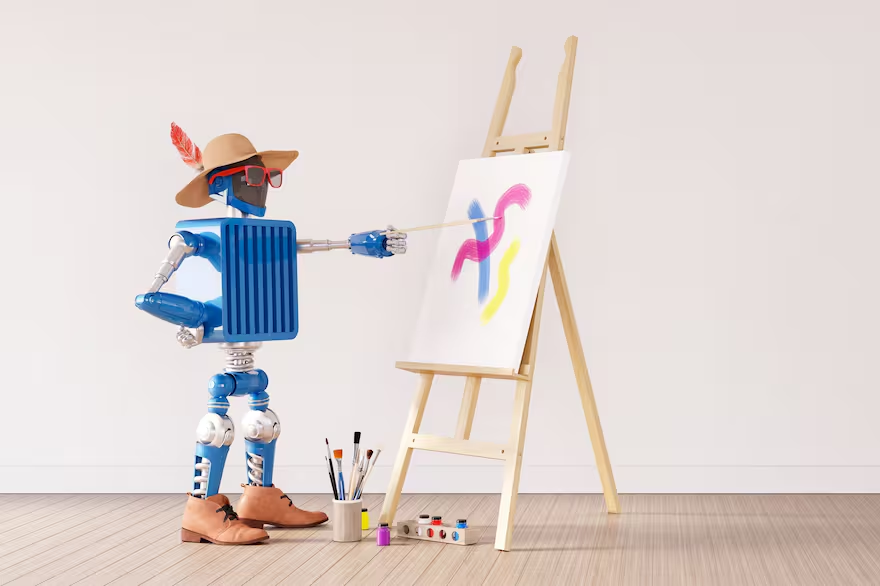
AI is producing works, inventions, and solutions that challenge the traditional legal structures of intellectual property. For example, who owns the copyright in a painting created by an algorithm such as DALL-E or MidJourney? How do you patent an innovation developed by a machine learning system that has no clearly identified human “inventor”?
The IP legal framework, designed to protect human creations, faces a dilemma: recognize AI as a creator or redesign the system to limit its reach. In South America, countries such as Brazil, Argentina, and Chile are discussing how to modernize their regulations in an attempt to respond to these new realities. However, progress is uneven and raises questions about the future of technological development in the region.
Even so, integrating AI brings benefits and challenges that must be understood in order to make the most of its potential and mitigate the risks in the world of IP.
AI and intellectual property: largely unexplored territory
The arrival of artificial intelligence raises legal and ethical questions that directly affect the management of intellectual property rights. Where should IP focus its attention? Here are the main challenges:
- Authorship and copyright: current legislation recognizes only natural persons as authors. This raises complex questions: who owns the rights to a work generated by AI? The user who gave the instructions, the AI developer, or the company that markets the technology? This legal gap creates uncertainty and could lead to legal disputes.
- Use of data for training: many AI tools are trained on large volumes of data that often include copyrighted works. This raises concerns about possible infringement and about how to balance the rights of IP owners with those of AI developers. For example, if an AI generates a work similar to an existing one, is it plagiarism or inspiration?
- Quality of and liability for generated content: AI can produce inaccurate or inappropriate content, which could create legal liability for the companies that use it. In the IP field, this could mean creating trademarks or designs that infringe existing rights.
- AI-generated patents and inventions: patents raise similar questions. If an AI designs a unique invention, who should be recognized as the inventor? This issue is particularly relevant in sectors such as pharmaceuticals and technology, where AI is driving significant discoveries.
Challenges specific to South America
- Fragmented regulations: while some countries are moving forward in updating their laws, others lack the legal infrastructure to address the challenges of AI.
- Unequal access to technology: the adoption of AI tools in the region is marked by economic and technological inequality. This could limit the participation of certain sectors in the global debate on IP.
- Education and training: there is a knowledge gap regarding AI and its impact on intellectual property. Lawyers, judges, and regulators need constant updating to address this issue.
Toward smarter regulation
The solution lies not only in updating existing laws but also in anticipating future innovations. Some experts propose creating a single framework for South America to regulate AI and intellectual property jointly. This would include:
- Defining authorship: determining whether or not AI can be considered a creator in certain specific cases.
- Interim protection: designing legal mechanisms to protect AI-generated creations while authorship disputes are resolved.
- Encouraging innovation: creating incentives for technology and creative companies to invest in AI without fear of excessive legal repercussions.
A revolution that is just beginning: AI and intellectual property
The impact of artificial intelligence on intellectual property reflects how technology is pushing past limits we once considered insurmountable. In South America, this revolution represents both a challenge and an opportunity: the chance to lead with innovative solutions and become a global benchmark for AI regulation.
The question is not whether we should adapt, but how we will do it. The future of intellectual property is at stake, and artificial intelligence is the protagonist of this new chapter. Are we ready to meet the challenge?
Real cases: AI and legal disputes
In 2023, a global controversy erupted when a Chilean artist used an AI tool to generate a collection of digital art that was presented as “his own.” The case sparked an intense debate in the region about the limits of technology-assisted creativity. Should the creator of the algorithm be considered a co-author of the work? Or do the rights belong exclusively to the human user who used the tool?
A similar case occurred in Brazil, where a law firm used AI to draft a patent application in record time. Although the automated system was not the “inventor,” its involvement sparked a discussion about the validity of patents generated in collaboration with AI technology.
Related reading: