Registering a trademark is not enough: in Argentina, the owner must actually use it. Learn what the INPI (Argentina’s National Institute of Industrial Property) requires, when a trademark can be declared lapsed, and how to protect your registration.
What actual use means
It is the real use of the sign in the marketplace in connection with the goods or services covered by the registration. Invoices, contracts, advertising, labels, and presence at points of sale are the usual evidence.
Use must be real, actual, and public, and it must be linked to the goods or services for which the trademark was registered. Some uses that help avoid cancellation:
- Goods on the market: the trademark visible on the packaging or labels of products sold in the country.
- Advertising and promotions: print ads, digital campaigns, physical or online catalogs.
- Commercial documents: invoices, purchase orders, or contracts that show the trademark.
- Partial use within the registered scope: for example, the trademark is registered for “clothing” and only T-shirts are sold.
What matters is being able to prove it: keep dated samples of that use. In trademark disputes, the question is not only whether the trademark was used, but also where, when, and for what.
The deadline for cancellation for non-use
Trademark Law No. 22,362 provides that five consecutive years without actual use entitle third parties to request cancellation. A trademark also lapses if it is not renewed within the legal deadlines.
This is set out in section 26 of Trademark Law No. 22,362: cancellation proceeds at the request of a third party with a legitimate interest, unless the non-use is due to duly proven force majeure. In addition, between the fifth and sixth year of the registration, the owner must file the mid-term sworn declaration of use.
Since the amendment introduced by Law No. 27,444 (2018), cancellation proceedings are handled by the INPI, and the burden of proof lies with the owner: the owner must prove that the trademark was used in the last five years. The principle is the same almost everywhere in the world — use it or lose it; in the European Union, for example, a trademark can be revoked after five consecutive years of non-use.
Partial cancellation: when only part of the registration is lost
Law No. 27,444 introduced partial cancellation, which began to apply in June 2023. Previously, a trademark either lapsed entirely or not at all; today it can lose protection only for the goods or services for which it was not used.
The aim is to prevent “defensive marks”: broad registrations made to block others, with no real intention of using them. Along the same lines, it is no longer possible to apply for a trademark covering “the entire class,” and registering more than 20 goods or services within a single class triggers additional fees.
For it to proceed, the following conditions generally have to be met:
- The trademark was not used, without interruption, during the previous five years for those goods or services.
- The owner did not file the mid-term sworn declaration of use.
- The trademark is not well known within the meaning of the Paris Convention and the TRIPS Agreement.
- Whoever requests the cancellation has a legitimate interest: for example, the unused trademark prevents them from registering their own.
It does not proceed if force majeure prevented use, and it may not apply if the trademark was used for related goods or services, even if they are in another class.
A case in point: VANTAGE
One of the first partial cancellation cases in Argentina involved the trademark VANTAGE, which was also registered for agricultural business consulting but used only by a pharmacy chain. Since the owner could not prove use in the agricultural sector, partial cancellation was declared, and another applicant was able to register VANTAGE for agribusiness advisory services. The lesson: a trademark has to be used for the goods or services for which it was registered.
Other ways to lose a registered trademark
- Failing to renew it: the registration lasts 10 years and can be renewed indefinitely for equal periods. If the deadline passes, including the grace period with a surcharge, the trademark is extinguished. See how to renew your trademark.
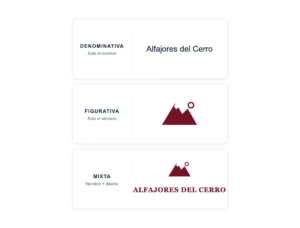
- Registering it incompletely: protecting only the name and not the logo, or not covering all the classes in which you will operate.
- Not watching it: if you don’t oppose similar trademarks published in the Gazette, your trademark loses exclusivity and ends up coexisting with them.
- Genericide: when the trademark becomes the common name of the product. The best-known case is “aspirin,” from Bayer; other common examples are Scotch tape, Voligoma (a glue brand in Argentina), and jacuzzi.
How to protect yourself
- Use the trademark exactly as registered, in the classes granted.
- Document sales and promotional materials in Argentina.
- Renew every 10 years in line with the INPI’s schedule.
- If you license the sign, record the agreement so that the licensee’s use counts in your favor.
Do you have a registered trademark that you don’t use? We assess the risk and the alternatives. Get a free consultation →
Keep reading: Frisby: plagiarism or an unused trademark? · How McDonald’s lost Big Mac