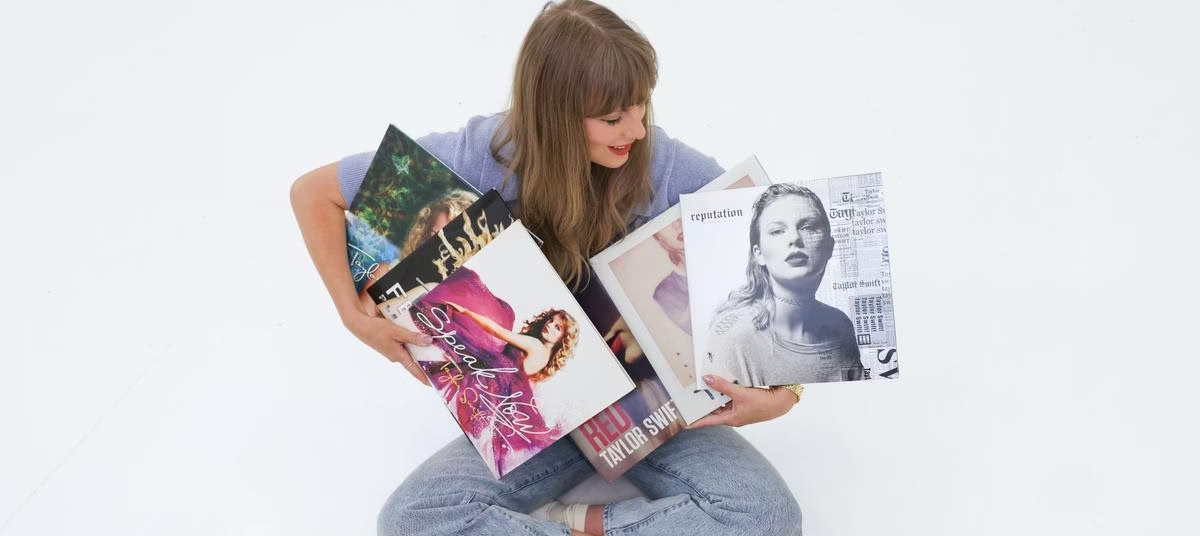
In June 2025, Taylor Swift officially regained the masters of her first six albums. But why does this matter so much? And what does it have to do with intellectual property? We explain it in detail, with rules that also apply in Argentina and in any creative industry.
What are masters, and why do they matter so much?
In the music industry, masters (or master recordings) are the original recordings of a song or album, from which all copies, distribution, and licenses are made.
Whoever owns the masters has economic control over the recorded work.
For example, they can decide:
🎬 Whether a song appears on Netflix.
📺 Whether it can be used in an advertisement.
📱 Which platforms it is distributed on or pulled from streaming.
🎧 Which versions are authorized to be played.
The conflict: how did Taylor Swift lose and regain control?
When Taylor signed with Big Machine Records, she had no control over her masters. In 2019, the label was sold to Scooter Braun, who acquired the rights to her first six albums (from Taylor Swift to Reputation). The artist publicly complained that she had not been given the opportunity to buy her own masters before that sale. In response, she launched a legal and creative strategy: re-recording her albums under the “Taylor’s Version” label, using her rights as songwriter and performer to create new versions of her works.
Taylor’s answer?
She re-recorded all the albums under the “Taylor’s Version” label. Legally, as songwriter and performer, she was able to make new recordings and thus regain commercial and symbolic control. In 2025, she finally acquired the original masters, which include:
🎼 Unreleased songs and demos,
🎬 Music videos,
🎤 Recorded concerts,
📸 Album covers and artwork,
©️ Synchronization and licensing rights.
What rights are at stake? An intellectual property analysis
The case involves different types of rights that coexist in a musical work:
- Copyright: as a songwriter, Swift already owned these rights in the lyrics and melodies. She holds moral rights (to be recognized as the author) and economic rights (to be paid for the use of the work).
- Related (neighboring) rights: as a performer, she had rights in her vocal performance, though not in the original recordings.
- Rights in sound recordings (masters): masters belong to the phonogram producer (the record label) unless otherwise agreed. That is why negotiating for or recovering those rights is key to controlling the future of the recorded work.
By regaining her masters, Swift can now make decisions about the entire cycle of exploitation of her work: synchronization, licensing, remastering, and platforms. Until early June 2025, the masters were in the hands of the phonogram producer (the record label).
If you work in the music world, this content may be very useful, with key information: Music and intellectual property.
Taylor Swift: a lesson for the creative ecosystem
The Taylor Swift case shows that control over intellectual property rights is not a technical detail: it is a strategic decision with legal, economic, and artistic consequences.
For artists, creative entrepreneurs, and legal professionals, this episode offers several key lessons:
- Read and negotiate contracts from the start.
- Properly register copyright and related rights.
- Know your legal alternatives when you lose control of a work.
- Treat intellectual property as a core asset of the creative business.
Conclusion
The American star didn’t just re-record her albums: she rewrote the rules of power between artists and record labels. Her case is an example of smart defense of intellectual property rights and of how creative autonomy is also built on legal foundations.
This case can inspire new creators to protect their works from day one, understanding that intellectual property is not just a legal safeguard but a tool for artistic and economic empowerment. At Eguía, we have a team ready to defend your rights and your creations.