In the world of intellectual property, few news stories have made as much of an impact as Mickey Mouse entering the public domain on January 1, 2024.
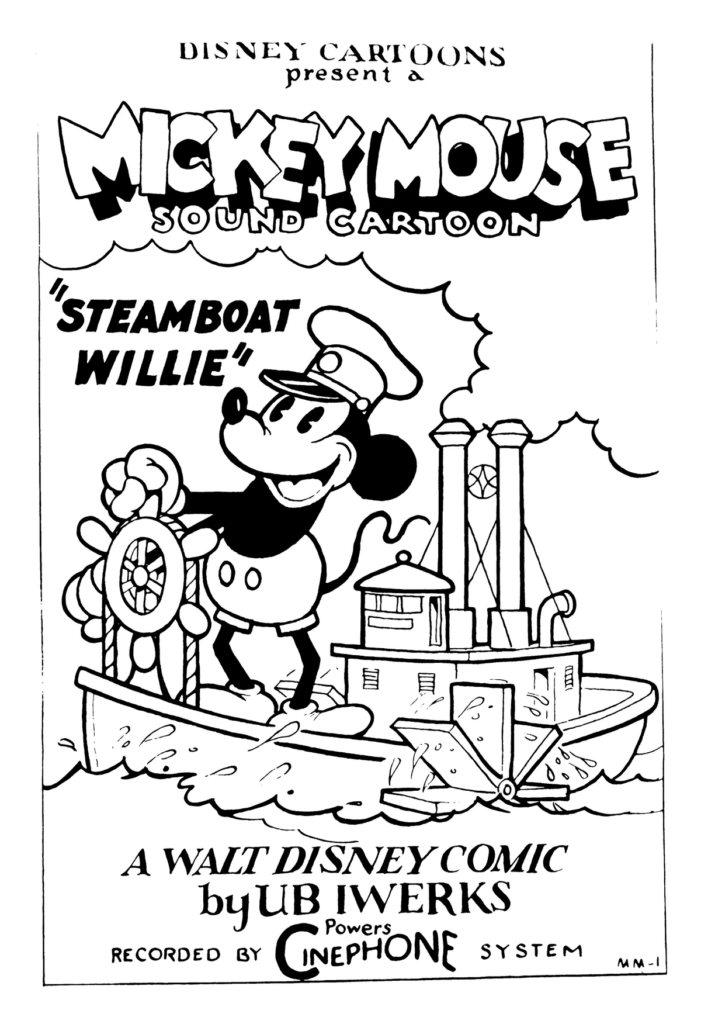
This iconic character, who made his debut in the short film Steamboat Willie in 1928, became a universal symbol of creativity and innovation in animation. However, after 95 years, the copyright in his original version has expired, allowing anyone to use it freely. What does it mean that the world’s most famous mouse has entered the public domain, and what benefits does this change bring?
What does it mean that Mickey Mouse is in the public domain?
The public domain refers to works that are no longer protected by copyright, which means they can be used freely without authorization or payment of royalties to the original creator. In the case of Steamboat Willie, copyright lasted 95 years under US intellectual property law. With its expiration in 2024, the black-and-white image of Mickey Mouse as he appears in this short film can be used by anyone to create new works, products, or adaptations.
It is important to note, however, that Disney retains trademark rights over later versions of Mickey Mouse, as well as over his commercial use. This means that, although the original character is free to use, any use that confuses consumers about an affiliation with Disney could infringe trademark law.
What does Mickey Mouse entering the public domain mean in practice?
- Free use and adaptations
Now that he is in the public domain, any person or entity can use the character in new works, adaptations, and/or products without obtaining permission or paying royalties to Disney.
- Competition and creativity
The ability to use such a popular and recognizable character can increase competition in the entertainment market, encouraging the development of new and diverse works and products and fostering creativity and innovation. It opens the door to a wave of content inspired by this character.
- Trademark protection
Although the copyright in Mickey Mouse’s image may expire, Disney retains trademark rights over the character. This means others can use Mickey’s image, but using it in a context that confuses consumers about its source or an affiliation with Disney could infringe trademark law.
Legal considerations: Disney’s role
As we have explained, despite the expiration of the copyright, Disney continues to actively protect its trademark rights over the more recent versions of Mickey Mouse and their commercial use. Therefore:
- Use of the original 1928 version is permitted, as long as it does not mislead the public about a possible affiliation with Disney.
- Creators interested in using Mickey Mouse should consult intellectual property experts to ensure legal compliance and avoid disputes.
At Eguía Marcas y Patentes, we are ready to advise companies and creators on the lawful use of works in the public domain. Our goal is to help you take advantage of these opportunities while ensuring compliance with the law.
The impact on Disney and the entertainment industry
Mickey’s entry into the public domain is a huge challenge for Disney, given that the character has been a symbol of its identity and commercial success for decades. Nevertheless, this change also represents an opportunity:
- Innovation and new characters: Disney now has the chance to explore new narratives and develop characters that captivate 21st-century audiences.
- Creative renewal: other creators’ reinterpretations of Mickey can revitalize the character and keep him relevant for new generations.
His enduring image in popular culture leaves a void that will be hard to fill. And many of us wonder who could become Mickey’s symbolic successor in the public’s heart.
An expert’s view, by Nicolás Eguía
“Mickey Mouse entering the public domain is not just an event in Disney’s history but a symbol of how copyright and intellectual property evolve to balance the protection of works with public access.
“At Eguía Marcas y Patentes, we understand the importance of protecting intangible assets such as trademarks and characters.
“It is a historic milestone for the entertainment industry. Disney, for its part, faces the challenge of protecting its legacy while seeking to reinvent itself. The departure of its most iconic character could be the push it needs to create new narratives, characters, and experiences that continue to captivate audiences worldwide.
“Ultimately, the loss of Mickey Mouse is also an opportunity, both for Disney and for independent creators. The public domain fosters innovation and cultural diversity, ensuring that historic characters like Mickey Mouse remain relevant and accessible to new generations.
“Is this the end of an era or the beginning of a new creative chapter? The answer undoubtedly depends on how well we make use of the opportunities the public domain offers us.”
Further reading: