By Clara Eguía · Eguía Marcas y Patentes
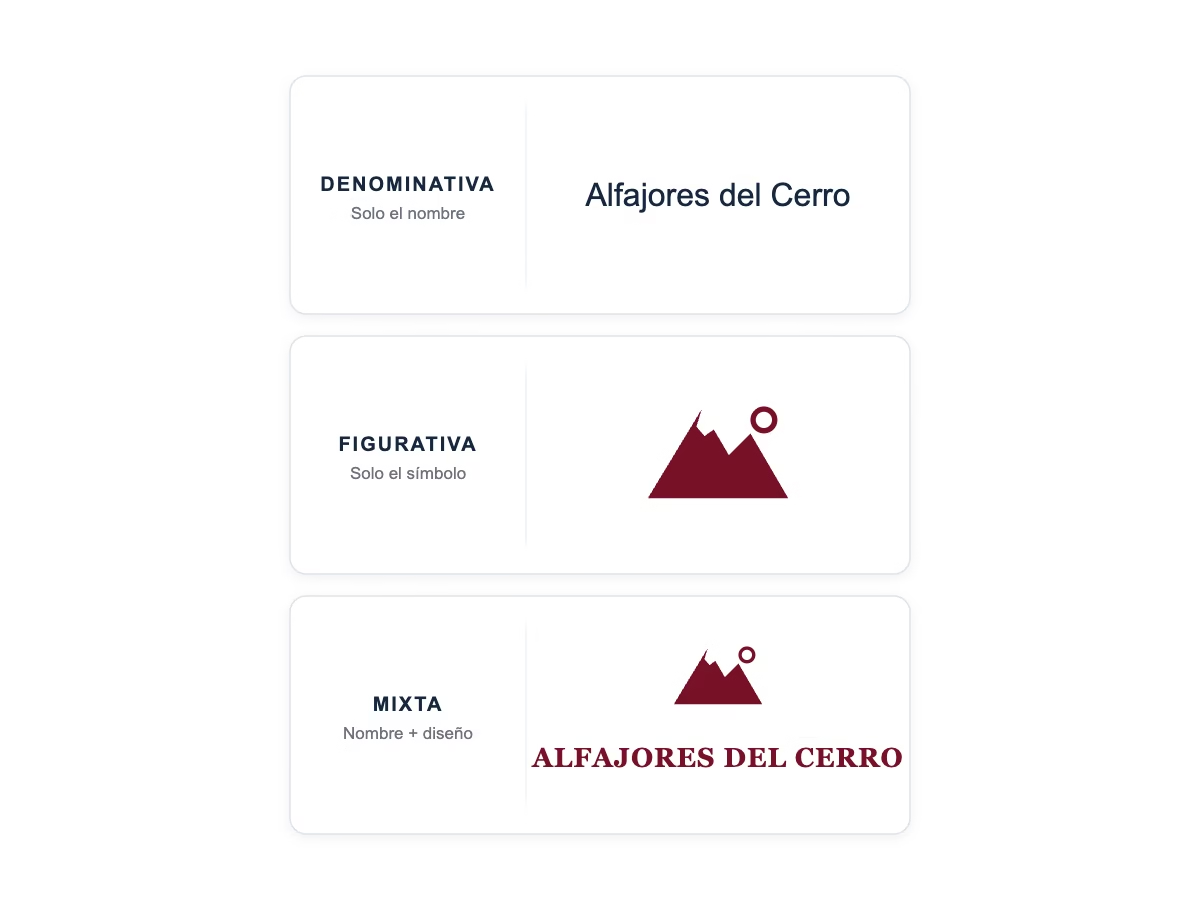
A word mark protects the name itself, regardless of how it is written. A figurative mark protects a design or logo without words. A composite mark protects the combination of name and design exactly as they are presented together. The choice determines what is and is not protected before the INPI (Argentina’s National Institute of Industrial Property), which is why you should decide before filing the application, not after.
Here is each type with examples, what each registration protects, and how to choose yours.
What a word mark is (and what it protects)
A word mark is registered as text only: the name, with no logo, no special typeface, and no colors. It protects the word or combination of words in any form in which it is written.
It is the broadest type of registration for defending a name. If you register “Alfajores del Cerro” as a word mark, you have the exclusive right to that name in the registered classes and can oppose its use by a third party, whatever typeface or design accompanies it.
Choose it when the most valuable part of your brand is the name: it is what your customers say, recommend, and search for on Google.
What a figurative mark is (and when it makes sense)
A figurative mark is registered as an image only: a logo, symbol, or design with no text elements. It protects that specific design, not the words that may be associated with it.
Adidas’s three stripes or Apple’s apple are the classic examples: symbols recognized without reading anything. In Argentina it is a less common registration than the composite mark, but it is key when the symbol works on its own.
Choose it when your visual identity is recognizable without the name, or when the name is already protected by a separate word mark registration.
What a composite mark is (the most registered type in Argentina)
A composite mark combines text and design in a single filing: the name with its typeface, colors, and logo, all together as a unit. It is the most common type among INPI registrations.
The point almost no one is clear about: a composite mark protects the whole exactly as it was filed. If you later change the logo or the typeface (a rebranding or a refresh), the new version is not covered automatically: you need to file a new application.
Choose it when name and design form an inseparable identity and you want to protect them as they look in the real world.
Word mark vs. composite mark: the most common mistake when registering
The classic mistake is registering only the composite mark in the belief that the name is protected “along the way.” It protects the whole: a third party using the same name with a different design may be a much more debatable case than if you held the word mark registration.
The strategy we apply with most of our clients is staggered:
- Budget for a single registration: a word mark, because the name is the hardest asset to rebuild.
- Budget to protect the full identity: word mark + composite mark, the combination established brands work with.
- A symbol with a life of its own: add the figurative mark.
Each additional registration is filed in the same classes of goods or services as the main one.
Argentine examples to make it clear
- Word mark: the name of an ice cream shop chain registered as text. If a third party uses it, in any typeface, the owner can oppose and take legal action.
- Figurative mark: the crest of a sports club, protected as a design beyond the club’s name.
- Composite mark: the label of a fernet or a craft beer: name + typeface + colors as a unit. Against “look-alike” imitations, what is compared is the overall impression.
How to register the type of mark you chose
Once the type is defined, the process before the INPI is the same: a trademark search to confirm availability, an application in the right classes, publication, and follow-up until the grant. The difference lies in what is filed: text only, image only, or the combination.
If you are unsure which version best protects your case, register your trademark in Argentina with the support of an industrial property agent. Your first consultation is free.
Frequently asked questions
Yes, and it is the most complete strategy. The word mark protects the name in any form, and the composite mark protects the visual identity as presented. They are independent applications, each with its own classes, and together they cover the two most common forms of imitation.
Partially. A composite mark protects the combination of name and design exactly as registered. Against someone who uses the same name with a different look, the defense is more debatable than with a word mark registration, which protects the word itself in any presentation.
The new version is not protected by the earlier registration. A composite mark registration covers the exact presentation that was filed; a redesign of the logo or typeface requires a new application with the INPI for the updated identity to be covered.
INPI fees are paid per application and per class, not per type of mark: word, figurative, and composite marks have the same filing cost. The difference in investment arises when two versions (word + composite) are registered for full protection.
Don’t choose your type of registration blindly: a 15-minute consultation determines which version truly protects your brand.