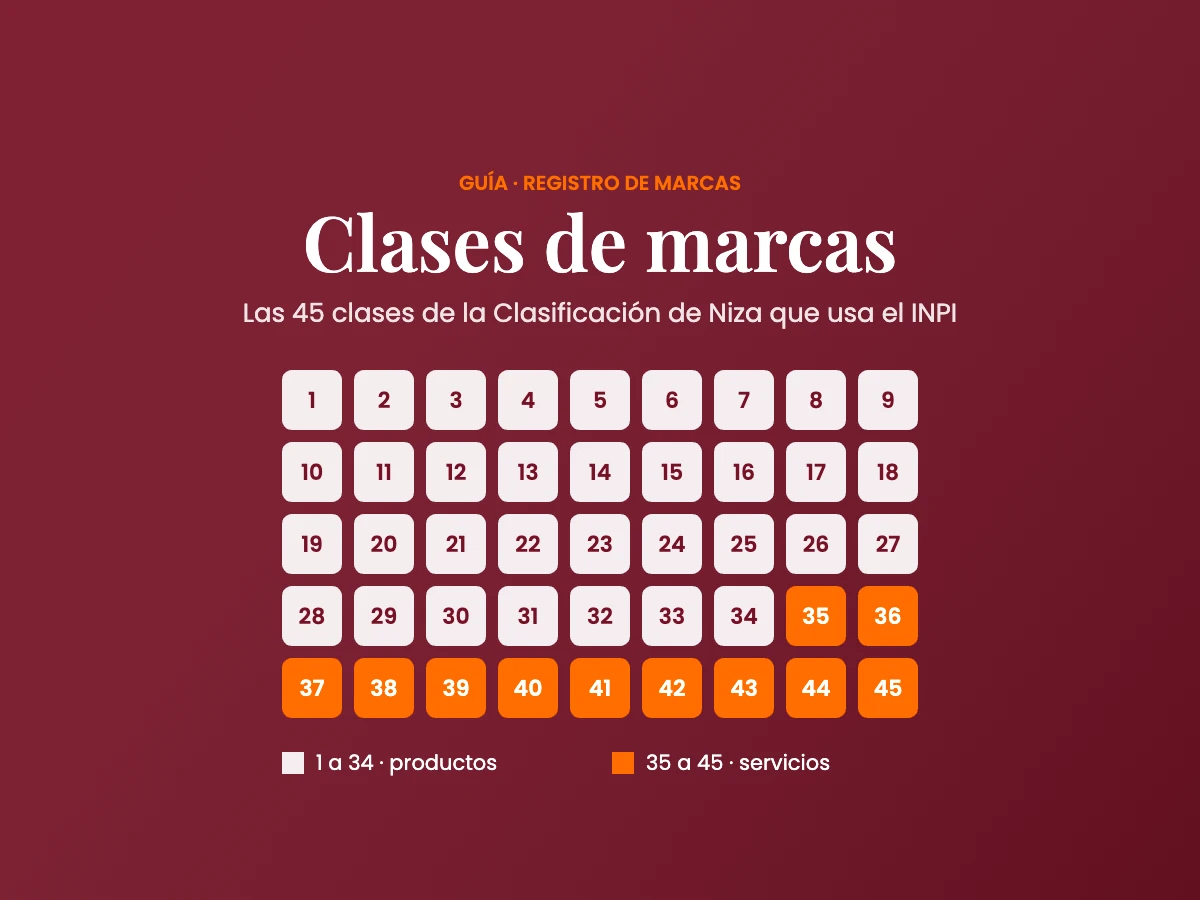
Trademark classes are the 45 categories of the Nice Classification that the INPI (Argentina’s National Institute of Industrial Property) uses to organize all goods and services: 34 classes of goods and 11 classes of services. Your trademark is not registered “in general”: it is registered in specific classes, and it is protected only in the ones you chose.
Choosing the wrong class is one of the costliest mistakes in the registration process: you can end up paying for protection that does not cover your actual business. Here is how the system works, which classes are used most in Argentina, and how to decide which ones you need.
How the Nice Classification works in Argentina
The INPI applies the International Nice Classification, the standard used by the trademark offices of most countries. Every trademark application is filed in one or more classes, a fee is paid for each class, and protection extends only to the goods or services in the classes granted.
This has a direct consequence: two identical trademarks can lawfully coexist if they operate in different classes and do not create confusion. The same name can be a clothing brand (class 25) and an accounting firm (class 35) without any conflict.
Trademark classes for goods (1 to 34): the most used in Argentina
The first 34 classes cover physical goods. These are the ones registered most often:
- Class 25: clothing, footwear and headwear. The class for every clothing brand.
- Class 30: coffee, tea, flour, baked goods, alfajores (Argentine filled cookies) and candy.
- Class 32: beer, water and non-alcoholic beverages. The class for craft breweries.
- Class 33: alcoholic beverages except beer: wine, fernet, gin.
- Class 29: meat, dairy products, preserved foods, snacks.
- Class 3: cosmetics, perfumery and cleaning products.
- Class 9: downloadable software, apps and electronic devices.
- Class 5: pharmaceutical products and supplements.
Trademark classes for services (35 to 45): the most used
The last 11 classes cover services. The most frequent ones:
- Class 35: advertising, business management and retail/wholesale services. The catch-all class for commerce, and one of the most contested.
- Class 41: education, training and entertainment.
- Class 42: software development and technology services (software as a service goes here, not in class 9).
- Class 43: food service and hospitality: restaurants, cafés, bars.
- Class 44: medical, beauty and veterinary services.
- Class 36: financial, real estate and insurance services.
- Class 39: transportation and logistics.
- Class 45: legal services.
Complete list of the 45 trademark classes
This is the complete list of the Nice Classification, with a summarized heading for each class. You can download the full class headings as a PDF (in Spanish), and the detailed list of goods and services is available in WIPO’s search tool.
Classes of goods: 1 to 34
| Class | Type | What it covers |
|---|---|---|
| Class 1 | Goods | Chemicals for use in industry, science, photography and agriculture; unprocessed resins and plastics; adhesives for use in industry; manures and fertilizers. |
| Class 2 | Goods | Paints, varnishes and lacquers; preservatives against rust and against deterioration of wood; colorants and dyes; printing inks. |
| Class 3 | Goods | Non-medicated cosmetics and toiletry preparations; non-medicated dentifrices; perfumery and essential oils; washing and cleaning preparations. |
| Class 4 | Goods | Industrial oils and greases, waxes; lubricants; fuels and illuminants; candles and wicks. |
| Class 5 | Goods | Pharmaceutical and veterinary preparations; sanitary preparations for medical purposes; food for babies; dietary supplements; disinfectants; fungicides and herbicides. |
| Class 6 | Goods | Common metals and their alloys; metal building materials; transportable buildings of metal; small items of metal hardware; safes. |
| Class 7 | Goods | Machines, machine tools and power-operated tools; motors and engines (except for land vehicles); agricultural implements other than hand-operated; vending machines. |
| Class 8 | Goods | Hand tools and implements; cutlery, forks and spoons; bladed weapons; razors. |
| Class 9 | Goods | Scientific, measuring, audiovisual and optical apparatus; apparatus for recording and processing sound, images or data; downloadable software and apps; computers and peripherals; fire extinguishers. |
| Class 10 | Goods | Surgical, medical, dental and veterinary apparatus and instruments; orthopedic articles; massage apparatus; articles for nursing infants. |
| Class 11 | Goods | Apparatus and installations for lighting, heating, cooling, cooking, drying, ventilating and water supply; sanitary installations. |
| Class 12 | Goods | Vehicles; apparatus for locomotion by land, air or water. |
| Class 13 | Goods | Firearms; ammunition and projectiles; explosives; fireworks. |
| Class 14 | Goods | Precious metals and their alloys; jewelry, precious and semi-precious stones; horological and chronometric instruments. |
| Class 15 | Goods | Musical instruments; music stands and stands for musical instruments; conductors’ batons. |
| Class 16 | Goods | Paper and cardboard; printed matter; stationery and office requisites (except furniture); drawing and artists’ materials; teaching materials; plastic bags and films for wrapping and packaging. |
| Class 17 | Goods | Unprocessed and semi-processed rubber, gum and substitutes for these materials; plastics and resins in extruded form for use in manufacture; insulating materials; flexible pipes and hoses, not of metal. |
| Class 18 | Goods | Leather and imitation leather; luggage and bags; umbrellas and parasols; saddlery; collars, leashes and clothing for animals. |
| Class 19 | Goods | Non-metallic building materials; rigid pipes, not of metal, for building; asphalt and bitumen; transportable buildings, not of metal. |
| Class 20 | Goods | Furniture, mirrors and picture frames; containers, not of metal, for storage or transport; unworked or semi-worked bone, horn or mother-of-pearl. |
| Class 21 | Goods | Household and kitchen utensils and containers; tableware (except cutlery); combs, sponges and brushes; cleaning materials; glassware, porcelain and earthenware. |
| Class 22 | Goods | Ropes and string; nets; tents and tarpaulins; awnings; sacks for the transport of goods in bulk; padding and stuffing materials; raw textile fibers. |
| Class 23 | Goods | Yarns and threads for textile use. |
| Class 24 | Goods | Textiles and textile substitutes; household linen (bed, table and bath); curtains of textile or plastic. |
| Class 25 | Goods | Clothing, footwear and headwear. |
| Class 26 | Goods | Lace, braid and embroidery; haberdashery ribbons and bows; buttons, hooks, pins and needles; artificial flowers; hair decorations; false hair. |
| Class 27 | Goods | Carpets, rugs, mats and matting, linoleum and other floor coverings; wall hangings, not of textile. |
| Class 28 | Goods | Games and toys; video game apparatus; gymnastic and sporting articles; Christmas tree decorations. |
| Class 29 | Goods | Meat, fish, poultry and game; preserved, frozen, dried or cooked fruits and vegetables; jellies and jams; eggs; milk, cheese and other dairy products; edible oils and fats. |
| Class 30 | Goods | Coffee, tea and cocoa; rice and pasta; flour and cereals; bread, pastries and confectionery (alfajores, candy); chocolate; ice cream; sugar and honey; salt, spices, sauces and condiments. |
| Class 31 | Goods | Raw and unprocessed agricultural, aquacultural, horticultural and forestry products; grains and seeds; fresh fruits and vegetables; natural plants and flowers; live animals; animal feed; malt. |
| Class 32 | Goods | Beers; non-alcoholic beverages; mineral waters; fruit beverages and fruit juices; syrups and other preparations for making non-alcoholic beverages. |
| Class 33 | Goods | Alcoholic beverages, except beers (wine, fernet, gin and others); alcoholic preparations for making beverages. |
| Class 34 | Goods | Tobacco and tobacco substitutes; cigarettes and cigars; electronic cigarettes and vaporizers; smokers’ articles; matches. |
Classes of services: 35 to 45
| Class | Type | What it covers |
|---|---|---|
| Class 35 | Services | Advertising; business management, organization and administration; office functions. It includes retail and wholesale services. |
| Class 36 | Services | Financial, monetary and banking services; insurance services; real estate services. |
| Class 37 | Services | Construction services; installation and repair services; mining extraction and oil and gas drilling. |
| Class 38 | Services | Telecommunications services. |
| Class 39 | Services | Transportation; packaging and storage of goods; travel arrangement. |
| Class 40 | Services | Treatment of materials; recycling of waste; air purification and treatment of water; printing services; food and drink preservation. |
| Class 41 | Services | Education; training; entertainment services; sporting and cultural activities. |
| Class 42 | Services | Scientific and technological services, research and design; industrial analysis and industrial design; quality control; design and development of computer hardware and software, including software as a service. |
| Class 43 | Services | Services for providing food and drink (restaurants, cafés, bars); temporary accommodation. |
| Class 44 | Services | Medical services; veterinary services; hygienic and beauty care for human beings or animals; agriculture, horticulture and forestry services. |
| Class 45 | Services | Legal services; security services for the physical protection of property and individuals. |
The mistake that costs the most protection: registering in only one class
The typical case: a brewery registers its trademark in class 32 (beer) but not in class 43 (bar services). A third party opens a bar under the same name, and the conflict is much harder to resolve than if the trademark covered both classes.
The right question is not “What do I sell today?” but “Where does my brand live, and where is it heading?” If you sell clothing (class 25) through your own online store with your brand displayed on the store (class 35) and you plan to open physical stores, that map defines your classes. Each class adds a fee, so the balance between coverage and budget is decided case by case. That is exactly the analysis we carry out before filing a trademark application.
How to know which class to register your trademark in
The Nice Classification search tool lets you search by term, but the fine print matters: some goods intuitively seem to fall in one class but belong to another (downloadable software is class 9; software as a service is class 42).
Before defining your classes, it is also wise to check that the name is available in those classes.
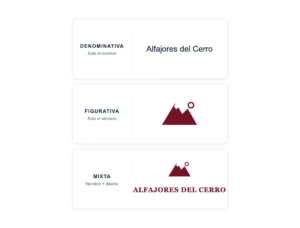
And if your trademark combines a name and a logo, the type of mark also affects the strategy.
Frequently asked questions about trademark classes
The Nice Classification has 45 classes: classes 1 to 34 cover goods and classes 35 to 45 cover services. It is the international standard applied by the INPI in Argentina, and every trademark application is filed in one or more of those classes.
Legally, yes, but each class carries its own fee, and a registration in classes where the trademark is not used may become vulnerable to petitions for cancellation for non-use. The right strategy is to cover the classes of your current business and its reasonable expansion.
Protection applies only in the classes granted: if your actual business falls in another class, the trademark does not cover it. A registration cannot be “moved” to a different class; you need to file a new application in the correct class, first checking that the name is still available there.
Yes, it is a common situation: the same name can be registered by different owners in classes that do not compete with each other. The limit is consumer confusion: if the classes are related or one of the trademarks is well known, coexistence is no longer peaceful.
Defining the right classes is half of a well-executed registration. Tell us what your brand does and we will tell you which classes to file in. Your first consultation is free.
Written by Nicolás Eguía, intellectual property attorney · Eguía Marcas y Patentes